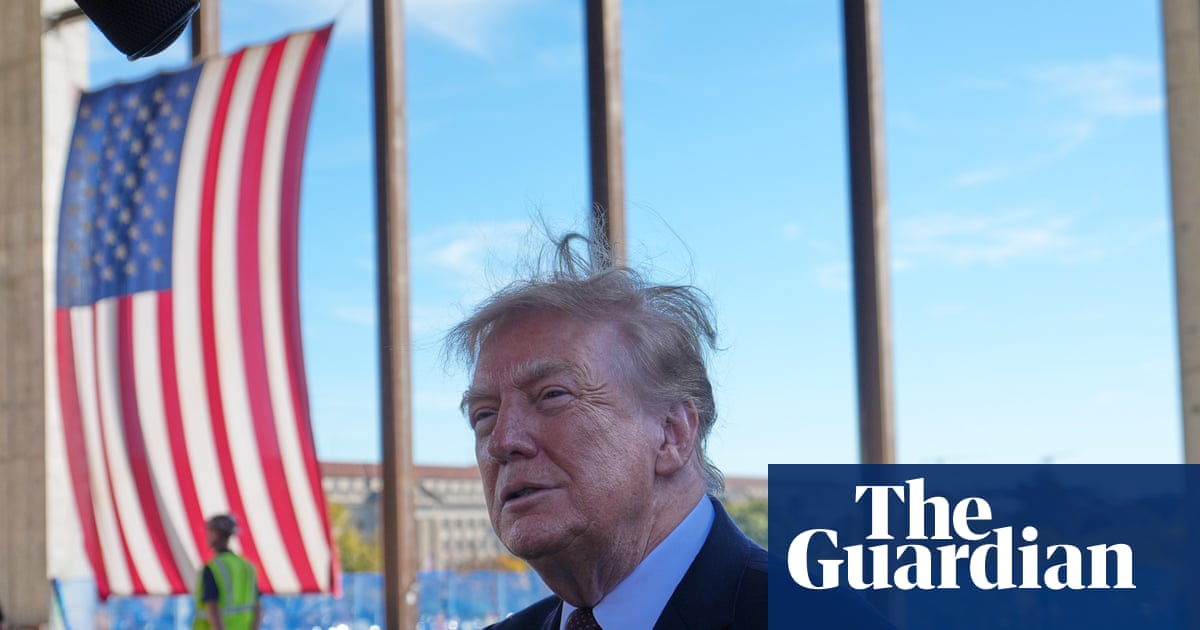
Donald Trump has accepted the outcome of the US midterm elections, according to The Guardian, after Democrats secured sweeping victories across the country. The results came despite an aggressive effort by his administration to cast doubt on the vote in advance. The system ultimately withstood those attempts at interference, and the worst-case scenarios that had been feared did not materialise.
An unnamed Trump adviser told CNN that the contest was "essentially too big to rig," The Guardian reports. The president made a public appearance the day after the results, but his remarks focused chiefly on his plans for a new White House ballroom rather than on the scale of his party's losses.
Why it matters
The midterms delivered a decisive verdict on Trump's second term and raised immediate questions about how much influence his endorsement still carries. Dozens of Republican candidates whom the president personally backed lost their races, according to analysis by The Guardian. That record undercuts the idea that his support can reliably carry a candidate over the line.
The results also reshape the balance of power in Washington. A Democratic-controlled Congress will probably attempt to limit Trump's room to pursue further foreign military action, The Guardian reports.
Iran war emerges as central issue
Criticism of the US-Israel war on Iran is being identified as a huge factor in the Democratic victory. The Guardian reports that the conflict was named as a key reason for the Republicans' poor showing.
Pete Hegseth is increasingly seen as the figure most likely to take the blame for the losses, according to The Guardian. JD Vance has already put distance between himself and the decision to strike Iran alongside Israel.
The fallout has extended beyond Washington. Robert Tait reported from Portland, Maine, for The Guardian on what the defeat of Susan Collins, a senator of nearly three decades, reveals about Republican unpopularity in the country.
Gains beyond the headline races
Democrats did not only win federal and statewide contests. They also picked up hundreds of seats in state legislatures nationwide, The Guardian reports. Those victories attracted less attention but may carry significant consequences for daily life in the United States.
Voters also used ballot measures to push policy in directions at odds with the Republican agenda. Nearly every datacenter moratorium put to voters was approved, according to The Guardian. Colorado voters rejected a conservative proposal that would have required police to cooperate with immigration officers. In Nevada, Virginia, Missouri and Idaho, voters passed or strengthened protections for women's reproductive freedom.
The night was difficult for Fox News, which saw a ratings slump, The Guardian reports. Nick Robins-Early noted in an analysis for the outlet that Elon Musk's spending of close to half a billion dollars on the midterms failed to deliver results. The Guardian attributes part of the Democratic success to public anger directed at the tech industry, artificial intelligence and the super rich.
Polling experts, meanwhile, celebrated what The Guardian described as a "great night" after correctly calling most of the key races.
What to watch
Attention now turns to how a Democratic-controlled Congress uses its new leverage over foreign policy and to whether the Republican Party reassesses its reliance on Trump's endorsements ahead of the next election cycle.